
MAINS A DAY
General Studies I
Akbar’s administrative and religious policies transformed the Mughal Empire from a conquering power into a durable imperial state. Discuss.
Last Updated
18th July, 2026
Date Published
17th July, 2026
Share This Post With Someone

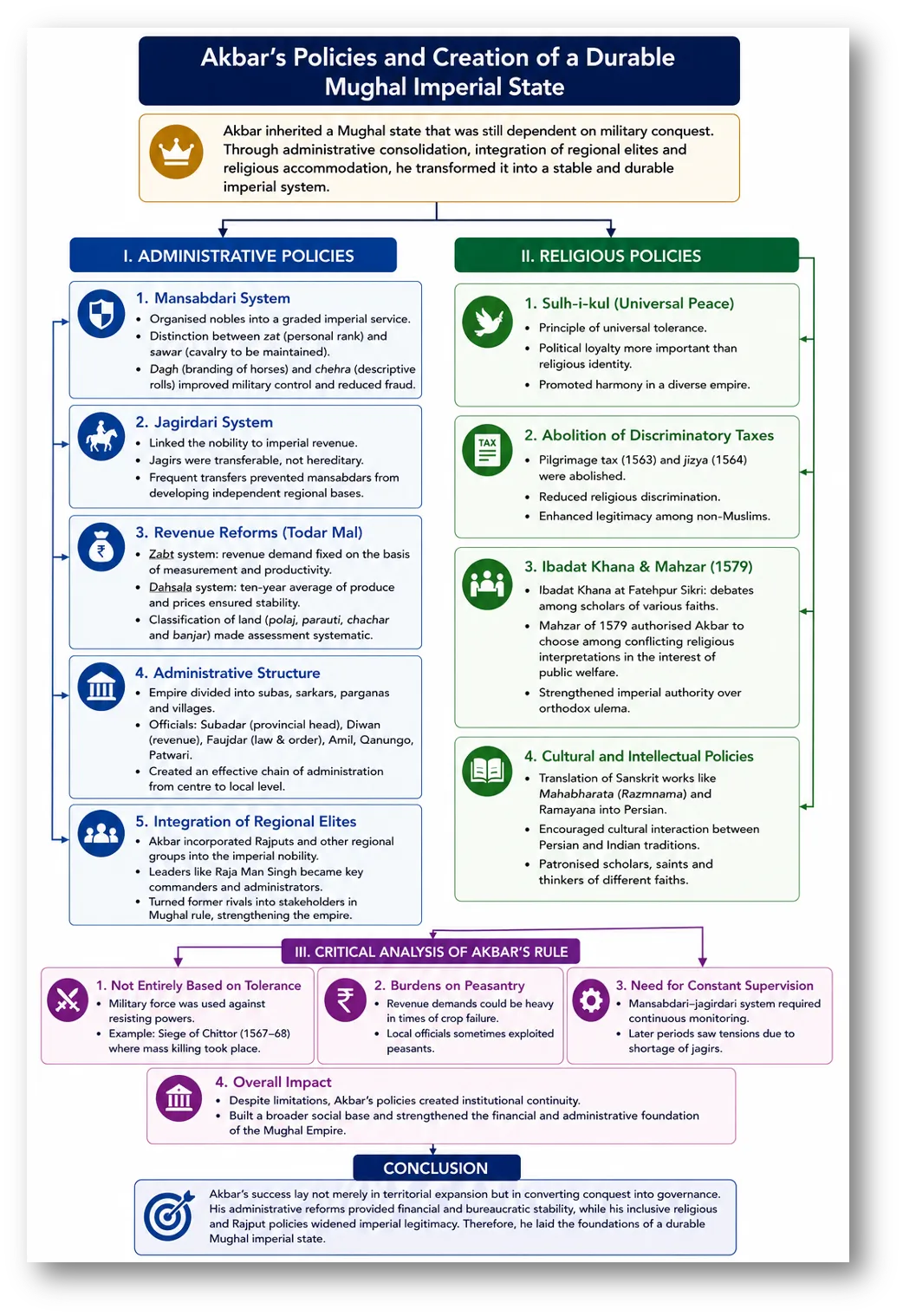
Ans. Akbar inherited a Mughal state that was still dependent on military conquest. Through administrative consolidation, integration of regional elites and religious accommodation, he transformed it into a stable and durable imperial system.
Administrative policies
- The mansabdari system organised nobles into a graded imperial service. The distinction between zat and sawar, along with dagh and chehra, improved military control and reduced fraud.
- The jagirdari system linked the nobility to imperial revenue while frequent transfers prevented mansabdars from developing hereditary regional bases.
- Revenue reforms associated with Todar Mal, especially zabt and dahsala, created a more regular and predictable source of income for the state.
- The division of the empire into subas, sarkars, parganas and villages established an administrative chain from the centre to the local level.
- Akbar incorporated Rajputs and other regional elites into the imperial nobility. Leaders such as Raja Man Singhbecame important commanders, turning former rivals into stakeholders in Mughal rule.
Religious policies
- Akbar’s principle of Sulh-i-kul, or universal peace, made political loyalty more important than religious identity.
- The abolition of the pilgrimage tax and jizya reduced religious discrimination and strengthened the acceptance of Mughal rule among non-Muslims.
- The Ibadat Khana debates and the Mahzar of 1579 enabled Akbar to place imperial authority above sectarian disputes.
- The translation of works such as the Mahabharata into the Razmnama encouraged cultural interaction between Persian and Indian traditions.
Critical analysis of Akbar’s Rule
- Akbar’s rule was not entirely based on tolerance. Military force was used against resisting powers, as seen at Chittor.
- Revenue demands could remain burdensome for peasants, and the mansabdari-jagirdari system required constant imperial supervision.
- Nevertheless, these policies created institutional continuity and a broader social base for Mughal power.
- Akbar’s success lay not merely in territorial expansion but in converting conquest into governance. His administrative reforms provided financial and bureaucratic stability, while his inclusive religious and Rajput policies widened imperial legitimacy. Therefore, he laid the foundations of a durable Mughal imperial state.
MAINS A DAY
General Studies I


General Studies I
UPSC Mains PYQs